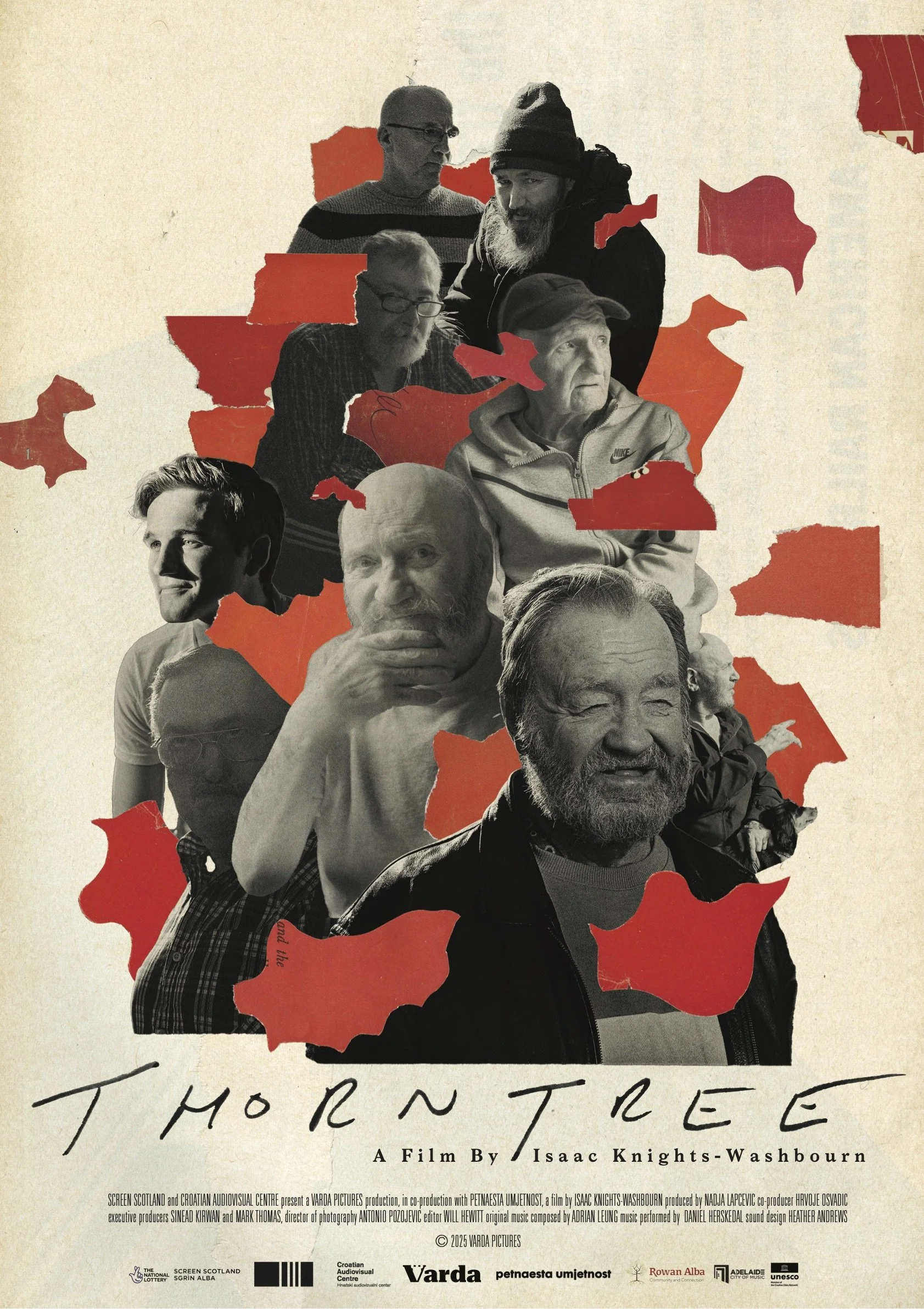
Thorntree
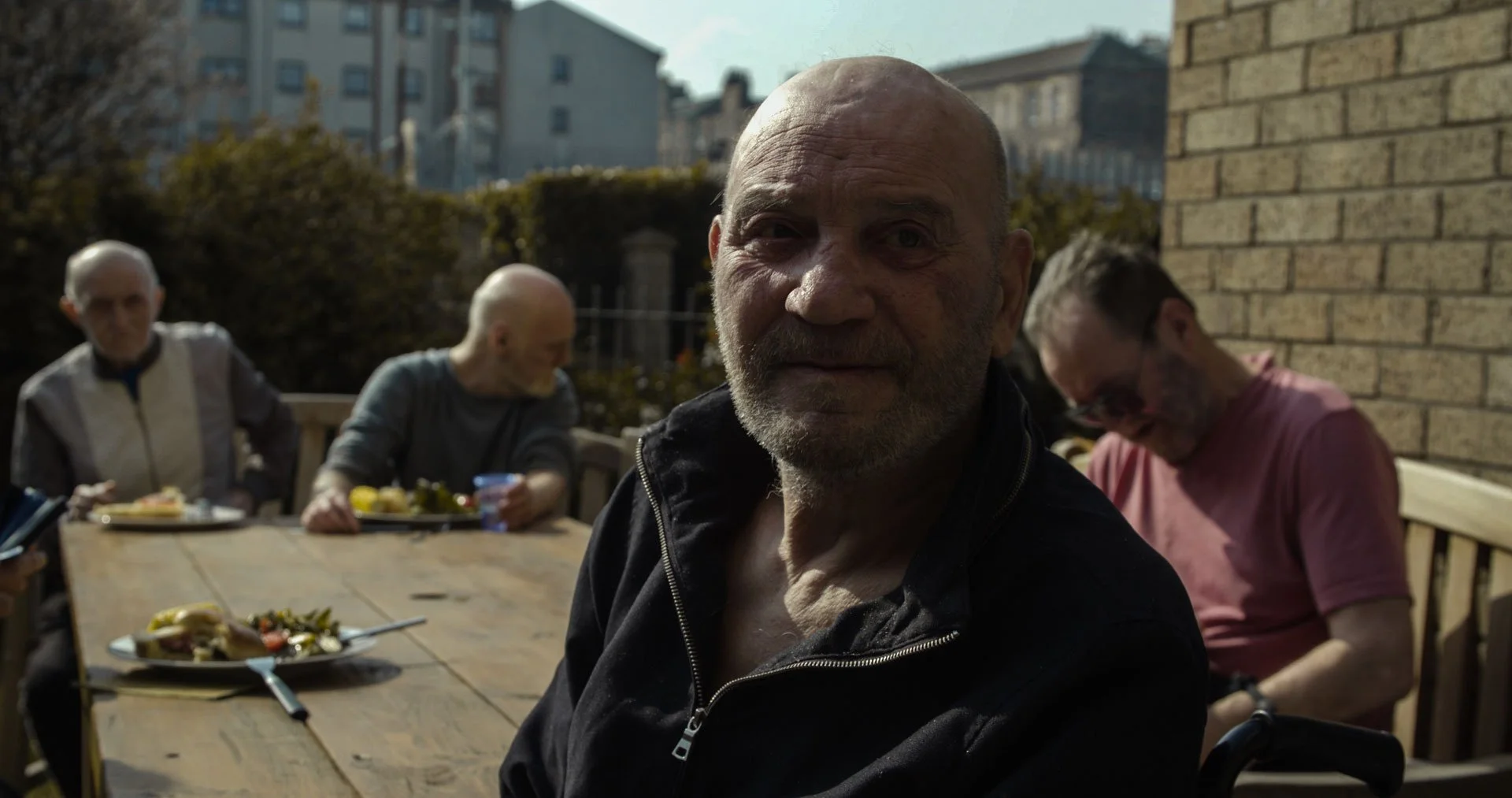
At Thorntree, a home for alcoholic men, the hours are strictly regulated: breakfast, lunch, dinner – all clearly marked on a blackboard. At the same time, the twelve current residents, each in their fifties and familiar with the hardships of the streets, are given unusual leeway: alcohol is allowed in Thorntree. Not all the men give in to their addiction, though. Gerry, for example, has been sober for two years and although he talks about his inner struggles, he sticks to a strict routine. Donald, on the other hand, oozes charm, but “is just doing whatever he wants to do”, sometimes ending up on the floor of the centre. Vodka bottles pile up in Stevie’s flat; as the film progresses, he embarks on a detox programme and then returns to Thorntree.
Isaac Knights-Washbourn, who has seen the effects of alcoholism in his own family, observes his protagonists with interest and respect. He organically provides insights into the structure of the institution while allowing the men plenty of space for interaction, introspection and, above all, fellowship.
I composed a very minimal score for this documentary. It was one of those projects where silence felt more important, and where pushing the emotion would have detracted from what we were seeing on screen.
Music comes in at a number of the key montage scenes, where the viewer is allowed to breathe for a minute and take in what they’ve been watching. I suggested a score consisting of only tuba and flugelhorn. I felt that the tuba, with its size, low frequency and hard metal exterior, represented the men in this film. Yet when you play the tuba in its highest register, it becomes something very tender, fragile and beautiful. I felt similarly about these men: the film challenges the misconception of alcoholics, allowing us to empathise with them.
Once Isaac agreed (thankfully!), I reached out to the incredible Norwegian musician Daniel Herskedal, whom I first came across in Emile Mosseri’s score for The Last Black Man in San Francisco. It’s hard to describe Daniel’s playing, but he conjures a completely new, emotive and sensitive sound that I’ve not heard from the instrument before.
Directed by Isaac Knights-Washbourn
Produced by Nadja Lapcevic, Varda Pictures in co-production with Petnaesta Umjetnost
Director of Photography by Antonio Pozojevic
Edited Will Hewitt
Festivals: Scottish Mental Health Arts Festival